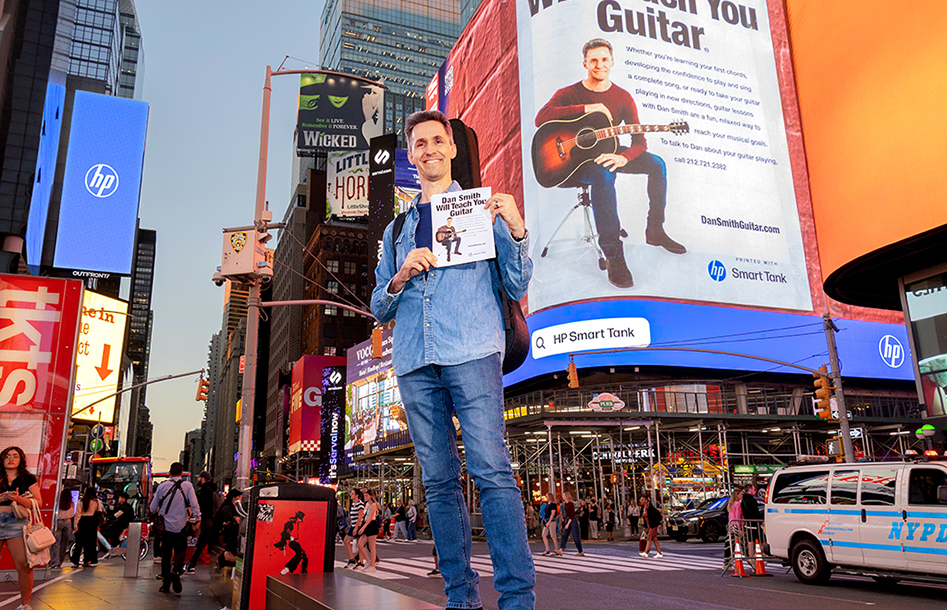
For decades, one of the most recognized media placements in New York City was not a multimillion-dollar display towering over midtown. It was an eight-and-a-half by eleven sheet of paper, taped to scaffolding and lampposts, promising guitar lessons to anyone passing by. It was scrappy, stubborn, and genuinely unignorable. When HP decided to amplify that piece of street folklore by putting it onto a massive Times Square billboard, the move was more than just a clever PR activation. It was a masterclass in cultural contextualization.
At its core, the campaign solved a modern brand dilemma: how does a legacy hardware manufacturer remind people that physical printing still matters? Most tech marketing attempts to sell relevance through abstract specs or sterile productivity promises. HP took the opposite route. By identifying an organic, beloved fixture of urban life and blowing it up to monument size, the brand tapped into earned emotional equity. They did not invent a narrative; they simply funded the scale of an existing one.
For marketers navigating an increasingly synthetic media environment, the strategic lesson here is about humility and borrowed credibility. Audiences have grown numb to hyper-targeted algorithmic ads that feel divorced from physical reality. In contrast, grassroots ephemera carries an inherent badge of authenticity. Street flyers work because they represent real individuals striving to reach real neighbors. When an enterprise brand elevates that hustle rather than mimicking it, the relationship shifts from self-serving promotion to genuine civic celebration.
There is also a sharp media lesson at play. High-impact out-of-home campaigns often falter when they treat giant screens like static magazine pages. What made this execution cut through was the deliberate tension of scale. Taking low-fidelity, utilitarian print and projecting it across one of the most expensive advertising spaces in the world creates cognitive contrast. It forces pedestrians to double-take, bridging the intimate charm of neighborhood lampposts with the kinetic energy of Times Square.
Ultimately, lasting marketing impact rarely comes from shouting louder about product features. It comes from demonstrating cultural awareness. By recognizing that a modest piece of paper held more local affection than most polished corporate campaigns, HP proved that true brand resonance begins with listening to the street before buying the sky.