When a tech titan orchestrates a retail spectacle, most brands know better than to step into the blast radius. At most, they might fire off a clever reply on social media and hope the algorithm smiles on them. But when Apple introduced its foldable device under the name iPhone Duo, Duolingo recognized an opening that could not be contained to a smartphone screen.
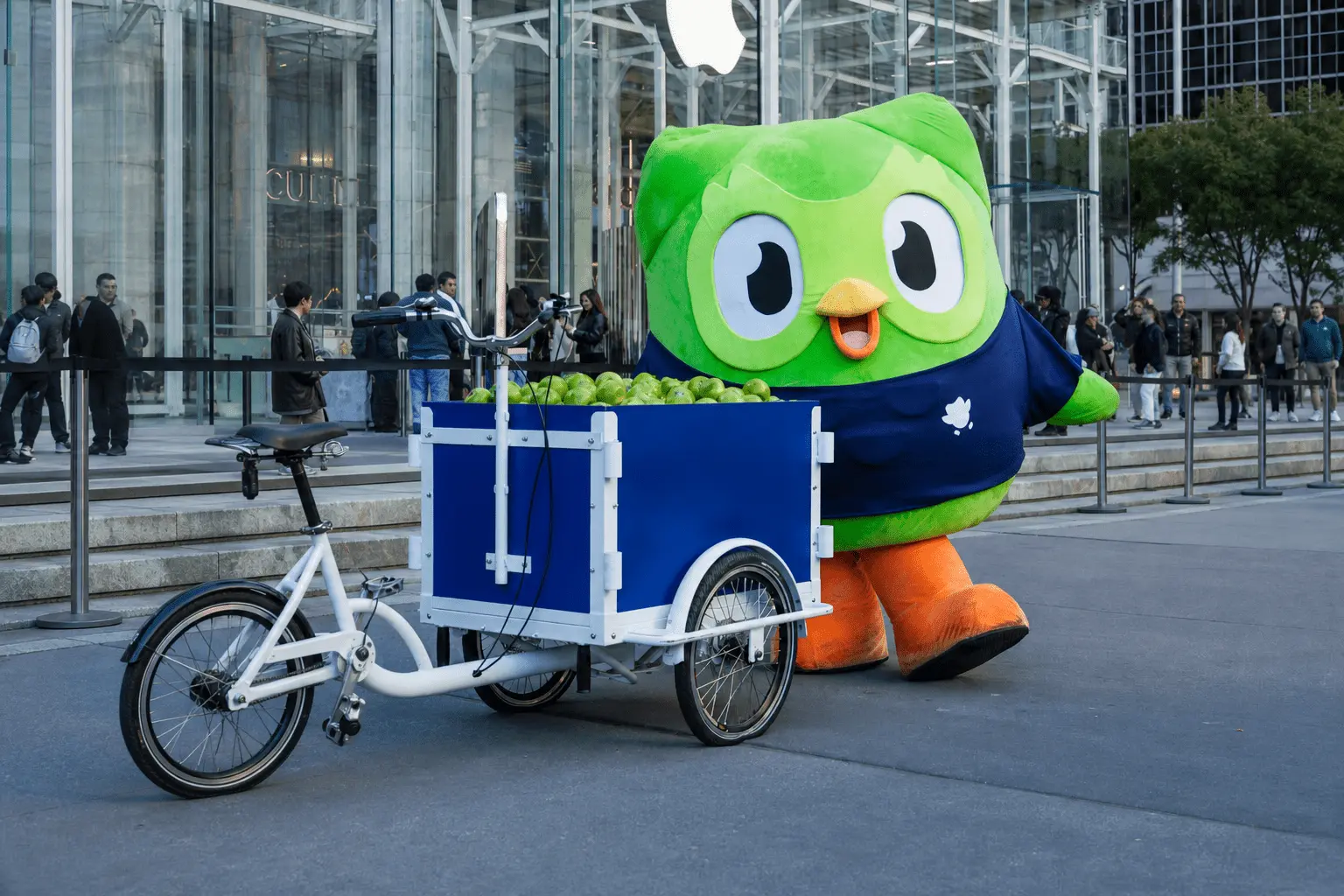
The name shared an obvious kinship with Duo, the language app’s notoriously relentless green mascot. What began in September as digital banter, with Samsung also joining the chorus to poke fun at Apple’s foldable debut, took a physical turn on October 23. As lines formed outside Apple’s flagship Fifth Avenue store in New York for the device’s retail rollout, Duolingo brought the gag straight to the pavement.
Positioned near the queue was a cart distributing what the brand called “Free Apple Duo.” Stationed beside it was the mascot, sporting a dark shirt styled after Apple retail uniforms, handing out crisp green apples. Each piece of fruit carried a custom sticker with a QR code and the app’s signature guilt trip: “Do your lesson.” Nearby outdoor posters reinforced the visual hijack, placing the owl over imagery of the folding hardware under the banner “This is Duo.”
Guerrilla stunts often feel like hollow attempts to borrow equity from another company’s media spend. Yet this intervention worked because of Duolingo’s existing character equity. Without years of cultivating an unhinged, pushy persona across digital channels, an educational app handing out fruit outside a retail launch would have felt bizarre and confusing. Because consumers already know the character’s tone, the brand needed zero runway to explain the joke.
More importantly, the stunt bridged cultural commentary with product behavior. Handing out branded fruit could easily have ended as an empty visual gag. By stamping each apple with a direct prompt to study and a scan mechanism back to the platform, Duolingo anchored the stunt to its core product experience.
There is a necessary caveat here. Viral photos and earned media coverage do not automatically translate to sustainable user acquisition or lifetime value. Duolingo has not published install figures or conversion metrics from the stunt, and marketers should be careful not to mistake applause for revenue.
Even so, the lesson lies in restraint and alignment. Reactive marketing succeeds only when the opening genuinely belongs to the brand. Duolingo did not have to alter its identity to gatecrash a competitor’s moment; it simply let an established character step off the screen and into the street.