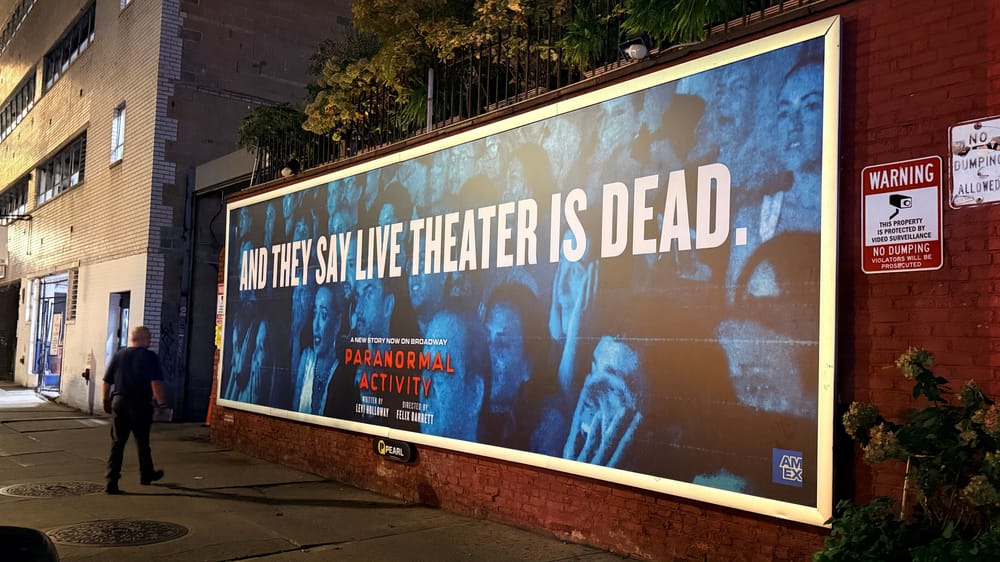
Most marketing campaigns obsess over explaining the product. They outline features, detail benefits, and meticulously unpack why a purchase makes logical sense. But when Paramount launched the original Paranormal Activity in 2009, it turned that instinct on its head by pointing the camera away from the screen and directly at the terrified faces in the dark. Now, the stage adaptation on Broadway is proving that the most persuasive asset any brand possesses is not its story, but the undeniable, visceral reaction of its audience.
Handled by theater agency SpotCo, the Broadway campaign has driven ticket sales past $1 million a week, sustaining near-capacity crowds and earning an extension through February 2027. The tactical engine behind these numbers is surprisingly classical: modernizing the film franchise’s reaction-based playbook for an era dominated by social feeds and experiential cravings. By filming genuine theatergoers alongside creators in London, Boston, and New York, the campaign built a narrative around pure emotion. A flagship reaction clip on Instagram and TikTok quickly gathered 2.4 million views. As SpotCo co-managing director and chief creative officer Callie Goff observed, the goal was never to explain the production: “At SpotCo, we talk a lot about when we’re selling a show, we’re not selling the plot. We’re not selling literally what happens on the stage. We’re selling the emotional promise and a sense of what the experience you’re going to have is going to be.”
That distinction carries profound weight for brand builders navigating widespread ad fatigue. SpotCo catalyzed early word of mouth by seeding previews with roughly 800 hand-picked creators, theater enthusiasts, and advocates, even flying a select group to Boston to generate anticipation before the New York opening. Crucially, the agency elevated organic, unpaid creator reactions directly into paid media placements. In Goff’s view, audience skepticism means consumers rarely trust a brand to grade its own homework; they trust people whose instincts they admire.
There is a broader cultural lesson here about the value of the non-replicable moment. In an economy oversaturated with on-demand streaming and solitary screen time, communal vulnerability carries immense currency. As Goff noted, you cannot duplicate a live, shared experience. For marketers across categories, the strategic takeaway is straightforward: when you stop marketing the mechanism and start dramatizing the collective feeling of being there, the audience does the selling for you.