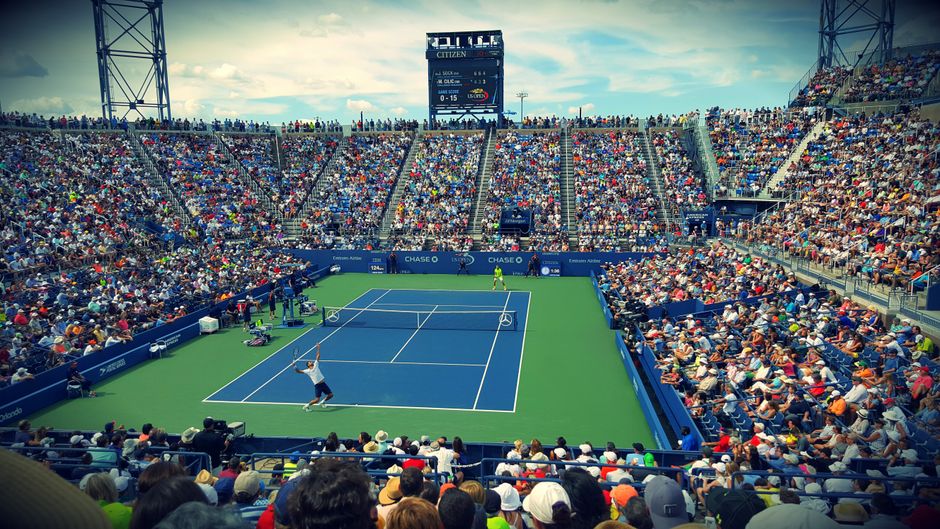
There is a peculiar tension at the heart of modern sports marketing. The more prestigious an event becomes, the more exclusive – and prohibitively expensive – it gets. The US Open has long stood out as the least buttoned-up of the Grand Slams, blending high-caliber tennis with Queens energy, caviar-topped nuggets, and the ubiquitous Honey Deuce cocktail. Yet as resale ticket prices surge, ordinary fans are increasingly priced out of the Billie Jean King National Tennis Center. For brand strategists, this introduces a crucial dilemma: how do you justify massive sponsorship investments when your live audience is shrinking into an insular bubble of wealth?
The answer is unfolding across the streets of New York. Savvy marketers are shifting their focus outside the gates, transforming high-dollar sports affiliations into distributed cultural moments that reach people who will never set foot in Arthur Ashe Stadium.
Grey Goose pioneered this democratization by pushing its signature Honey Deuce cocktail into local neighborhood bars and on-demand delivery apps. Lavazza followed a parallel playbook, collaborating with Eataly and Highsnobiety to deliver tournament-themed hospitality away from the courts. As Daniele Foti, vice president of marketing for Lavazza North America, pointed out, the goal is building genuine cultural connection, making offsite presence central to modern sponsorship strategy.
Even technology and enterprise giants recognize the shifting landscape. IBM, which powers the tournament’s scoring app and cloud infrastructure, took over Madison Square Park with a free, interactive pop-up during the final week. Last year’s activation drew more than 500,000 visitors. For IBM Chief Brand and Communications Officer Sarah Meron, translating complex, esoteric software into physical consumer interactions creates a rare halo effect. It builds real brand affinity among prospective enterprise buyers and media analysts living in the city, provided the activation delivers enough value to command an actual lineup.
Other players are leaning on omni-channel storytelling rather than on-site presence. Smart-ring maker Oura paired New York out-of-home media with high-profile athlete endorsements from Coco Gauff and Taylor Fritz. CMO Doug Sweeny noted that a considered purchase demands deliberate touchpoints, whether a customer encounters Gauff on Instagram, spots a display in Target, or sees an ad on ESPN.
Meanwhile, Mercedes-Benz leveraged its WTA partnership and relationship with Gauff to roll out organic, behind-the-scenes social content that pulls back the curtain on tennis culture. Much like Formula 1 demystified its rarified world for a mainstream global audience, luxury brands are realizing that exclusivity creates allure, but accessibility builds longevity. When the physical gate is shut to most consumers, the smartest brands are the ones building windows.