Most luxury campaigns follow a predictable formula: assemble a cast of cultural tastemakers, shoot polished films, and buy media across high-traffic platforms. Yet modern consumers, particularly younger demographics, have developed an acute instinct for spotting when cultural alliances are purely decorative. How does a legacy fashion house turn passive sponsorship into genuine cultural resonance?
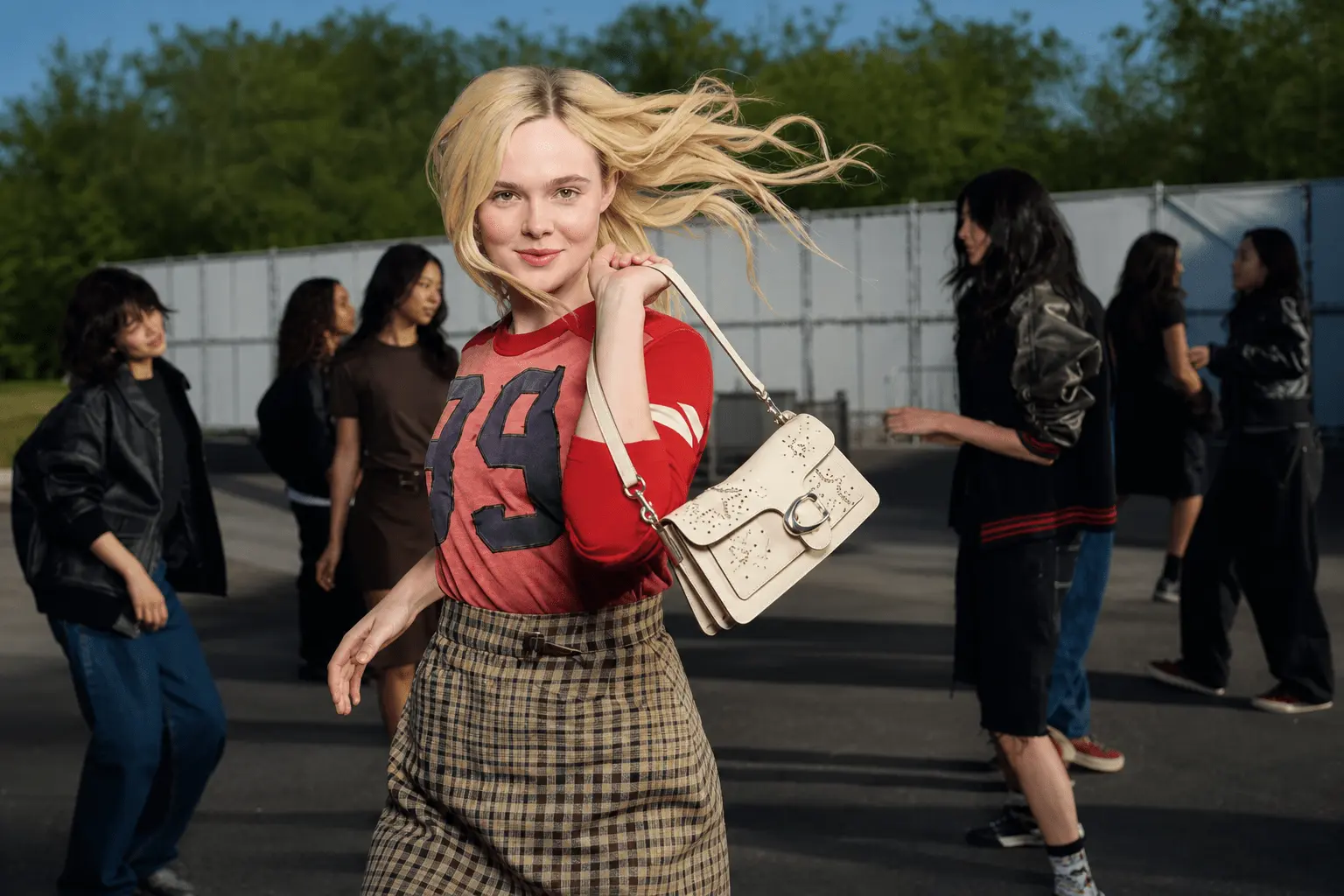
Coach addresses that challenge directly in its Fall 2026 campaign, "Live Your Story." Rather than using Spotify as a conventional ad buy, the brand treats the streaming platform as operational connective tissue. The narrative spine features actress Elle Fanning driving a bus toward a music festival, picking up artists PinkPantheress, SOYEON, Lilas, and Shan Yichun along the way. Each musician contributes an original track to the campaign soundtrack. Crucially, Coach also casts twelve Gen Z music fans in the films and stills, signaling a deliberate shift from aspirational celebrity idolatry toward shared community taste.
The mechanics behind the launch offer a masterclass in modern brand integration. Through an activation dubbed Courage Frequency, Spotify parses listener behavior to assign fans one of six "Courage Signs," generating bespoke playlists based on individual streaming habits. Coach mirrors that digital personalization in physical retail with five special-edition Tabby bags tied to the featured talent, complete with customizable concert-ticket charms. By establishing that relationship, the algorithm and the accessory deliver the same message: personal taste is an identity marker worth wearing.
This ecosystem also solves the persistent problem of post-launch fatigue. The bus in the campaign film breaks through the fourth wall to become the physical Tabby Tour, traveling from New York through early 2027 across the United States, the United Kingdom, Japan, and South Korea. These physical activations house live sets, creative dialogues, and personalization stations, generating continuous localized storytelling. Notably, Coach shows equal strategic maturity in China by swapping Spotify for QQ Music and Bilibili, proving that brand consistency does not require rigid platform dependency.
The takeaway for brand strategists is fundamental. Lasting cultural relevance cannot simply be rented through celebrity endorsements or generic media spend. It requires building an integrated system where narrative, consumer data, and real-world activation naturally reinforce one another. Coach did not simply sponsor a soundtrack; it provided an infrastructure for self-expression.