Modern experiential retail has settled into a predictable rhythm. A brand leases high-rent real estate, paints the walls in photogenic hues, and funnels foot traffic straight toward a line of mobile payment terminals. Whether looking at Rhode packaging summer glosses on tour or multi-brand K-beauty markets popping up in regional malls, the pop-up format has largely functioned as a high-gloss, temporary sales counter.
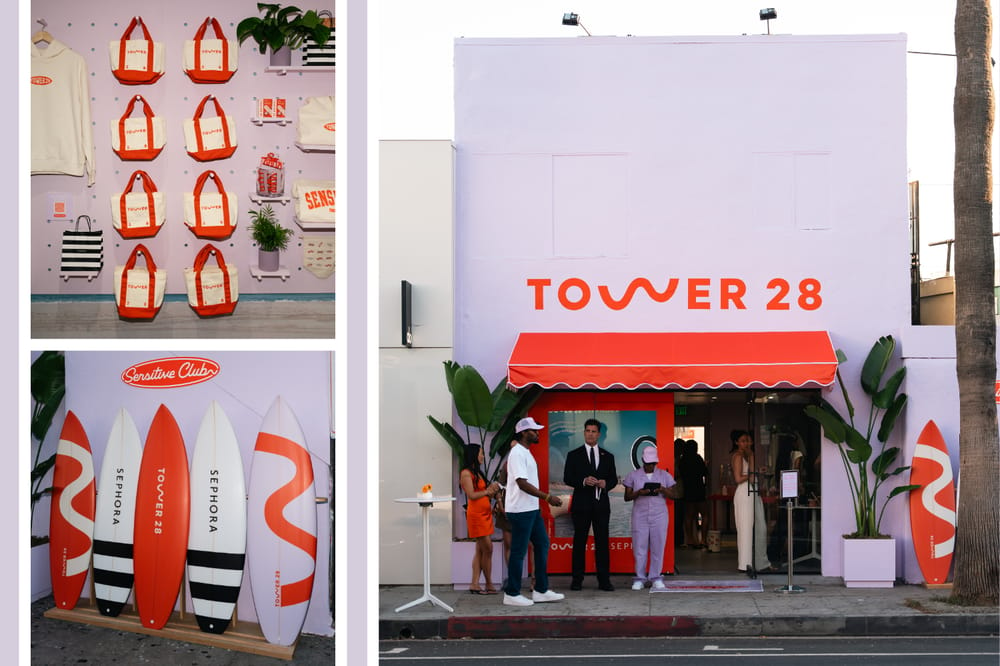
Which is why Tower 28 took a decidedly contrarian path with its first dedicated physical space. The sensitive-skin label recently hosted nearly 2,000 visitors at its Venice storefront, dubbed the Sensitive Club. Inside, guests could receive shade-matching consultations for a new serum foundation, top off bottles of facial toner at a refill station, and pick up branded hoodies or tote bags. Yet they could not purchase a single beauty product.
For founder and CEO Amy Liu, walking away from transactions was the entire point. The brand is hardly struggling for scale. Tower 28 is a nine-figure business that generated 119 million dollars in gross merchandise value over the past year, powered by digital channels and an expanded presence inside Sephora that doubled its shelf space from four bays to eight. But rapid wholesale expansion introduces a distinct structural trap: audience disintermediation.
When a shopper buys your product off a department store shelf, the retailer owns the customer, the behavioral data, and the loyalty equation. Liu recognized that without intentional, direct-to-consumer experiences, the brand risks becoming just another SKU on someone else’s real estate. Opening the Sensitive Club, alongside a playful Jell-O collaboration in Venice just days prior, offered an antidote to that operational distance.
Instead of measuring return on investment through immediate basket sizes, Tower 28 treated physical space as a forum for shared identity. The exclusive merchandise on site, including safety-pin badges designed as quiet symbols of skin acceptance, functioned as cultural artifacts rather than retail inventory. It gave consumers a way to signal belonging to one another in the real world.
Marketers frequently speak about community as though it automatically trails commercial success. Yet genuine connection requires environments where people are welcomed as participants rather than checkout targets. When a brand frees physical space from the pressure of short-term conversion, retail stops acting like an expensive billboard and becomes what modern brands need most: an authentic cultural home.